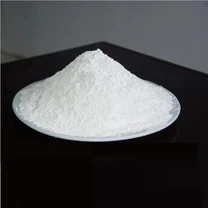
The main function of anti-rust pigments is to prevent metal corrosion and improve the protective effect of paint on metal surfaces. The role of anti-rust pigments can be divided into two categories: physical anti-rust and chemical anti-rust, of which chemical anti-rust pigments can be divided into two types: corrosion inhibitor and electrochemical.
1. Physical anti-rust pigment
Physical anti-rust pigments use its fine particles to fill the paint film structure, improve the density of the paint film, play a shielding role, reduce paint permeability, and thus play a role in rust prevention, such as iron oxide red, aluminum powder, Glass flakes, etc. Iron red, also known as iron oxide red, has stable properties, strong hiding power and fine particles, which can play a good role in paint films. It has good heat resistance and light resistance, and is very stable to the atmosphere, alkalis and dilute acids. Epoxy primers are mostly used.
Mica iron oxide, whose chemical composition is iron trioxide, has good chemical inertness. The scales formed in the layer are arranged to form a complex and tortuous diffusion path in the paint, which makes the diffusion and penetration of corrosive media quite tortuous and difficult. Penetrate into the substrate. Moreover, it can be used in top paint to improve weather resistance, such as epoxy mica intermediate paint.
2. Chemical anti-rust pigments
(1) Chemical corrosion-inhibiting anti-rust pigment
Anti-rust pigments with chemical corrosion inhibitors rely on chemical reactions to change the properties of the surface or the characteristics of reaction products to achieve the purpose of anti-rust. Anti-rust pigments with chemical corrosion inhibitors can interact with metal surfaces such as passivation and phosphating to produce new surface films, passivation films, and phosphate films. The electrode potential of these films is more positive than that of the original metal, so that the metal surface partly or completely avoids the possibility of becoming an anode; in addition, there are many micropores on the film, which is conducive to paint adhesion. Commonly used chemical corrosion inhibitor pigments include lead-based pigments, butyric acid eye pigments, and phosphate pigments.
Zinc Butyrin is mainly used in Butyrate Antirust Pigment, and the main component is Zinc Butyrate. It is the most widely used anti-rust pigment among butyrates. It is mainly used as an anti-rust paint for light metals such as aluminum and magnesium. Of course, it can also be used for anti-rust on the surface of steel. The anti-rust mechanism of zinc butyrate is to passivate the metal surface, thereby inhibiting corrosion and achieving the purpose of anti-rust.
(2) Electrochemical action type anti-rust pigment
The most important anti-rust pigment with electrochemical effect is zinc powder. Anticorrosive paint with zinc powder as pigment, such as epoxy zinc-rich primer, forms a conductive protective coating on the surface of steel. The chemical reaction of zinc forms zinc salts and zinc complexes on the coating surface. These products are extremely insoluble stable substances and precipitate on the coating surface to prevent the corrosion of oxygen, water and salts. To the anti-rust effect, the steel is protected.