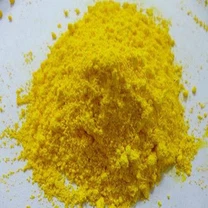
The first section of the red lead
1. The composition and properties of red lead
Red lead is also known as lead lead and Zhangdan, and its chemical name is lead tetroxide.
The appearance of red lead is orange-red powder, and the relative density is 8.6. After the paint is made, it has strong adhesion and hiding power, and long-term light exposure produces a lattice change, from orange to gray Dark. In addition, red lead is insoluble in water and alcohol, but soluble in overheated alkali. Under acidic conditions, it partially dissolves to form water and salt, and the precipitated part is PbO2.
2. Application of red lead in coating
Red lead has a long history of being used in coatings. It has been used as an anti-rust pigment, especially the anti-rust paint formulated with linseed oil, which has good anti-rust performance. It is characterized by low requirements for the surface treatment of steel, and it still has a good anti-rust effect when it is painted on the surface with residual rust. Hongdan has the following principles of action
(1) Red lead can have an effect in both the anode area and the cathode area, but this effect does not depend solely on its dissociation degree, but mainly depends on the exchange of lattice ions.
(2) The role of red lead in the cathode zone is to destroy the newly formed hydrogen peroxide and inhibit the surface of steel from no longer oxidizing.
Section 2 Modified Barium Borate
Modified barium metaborate is a kind of non-toxic anti-rust pigment. The so-called non-toxic anti-rust pigments are phosphate, molybdate, borate and iron oxides.
Modified barium metaborate is a white powder prepared by coating barium metaborate with amorphous hydrated silica.
Anti-rust mechanism of modified barium metaborate
Alkaline substances have been used as inhibitors of coatings on steel surface corrosion. These inhibitors include amine hydroxide, various amines and modified barium metaborate.
Use of modified barium metaborate in coatings
Modified article Barium borate is used in the coating industry. Its outstanding features have multiple efficacies. Modified barium metaborate has anti-rust, anti-mold, anti-bacterial, anti-pollution, anti-pulverization, prevention of discoloration, flame retardancy, etc. in coatings. Function, a multi-functional anti-rust pigment
1. Anti-rust effect: used in primer, has excellent protective effect
2. Anti-mold effect: the durability of the paint film and the decorations are eroded by mold and bacteria
3. Anti-chalking effect
4. Flame retardant effect: the flame retardancy of borate was first used in textiles and other coatings
Section Three, Chromate Pigments
These types of pigments were used as coloring pigments when they first appeared. For example, zinc chrome yellow was lemon yellow, which was more light fast and resistant to hydrogen sulfide gas. Since 1860, zinc yellow and iron blue were used to form zinc green. But the tinting power and hiding power of zinc chrome yellow are not as good as lead chrome yellow.
In 1908, Heckel and Cushman suggested that zinc chrome yellow has an anti-corrosion effect similar to potassium dichromate. They inferred that if zinc chrome yellow is mixed into the primer, when water penetrates the topcoat and enters the bottom layer, it can be supplied by zinc chrome yellow. Enough chromate ions can passivate the metal surface and prevent the corrosion process from proceeding. Therefore, zinc chrome yellow can use water to diffuse the chromate ions that have a corrosion-inhibiting effect. Practice has proved that the zinc chrome yellow primer has an anti-rust effect.
The anti-rust mechanism of zinc chrome yellow can be explained by its chemical and electrochemical reactions with steel. Passivation is caused by the electrochemical process that occurs in the cathode area, so that iron ions and chromate ions (Cr+6) form a layer of metal oxide hydrate on the surface of steel. This type of chromate can provide Chromate ions, after being formulated into coatings, have a passivation effect on the surface of steel and have anti-rust and anti-corrosion functions. Therefore, this type of pigment has become a major category of anti-rust pigments;
, The main varieties are zinc chrome yellow, strontium chrome yellow, barium chrome yellow and calcium chrome yellow.
1. Zinc Chrome Yellow
The chemical composition of zinc chrome yellow has not been determined at the beginning. Because zinc chromate (ZnCrO4) has a large solubility, it cannot be used as a pigment alone. It must be made into a basic salt or a composite salt with potassium chromate to have a pigment. Nature. Due to the difference in the ratio of raw materials and the preparation method, zinc chrome yellow pigments with different chemical components can be prepared. Used for anti-rust primer and phosphating primer.
Zinc Chrome Yellow is mainly used to prepare various anti-rust primers. The base material of phenolic resin can be made into zinc yellow phenolic primer, and the base material of alkyd resin can be made into zinc yellow alkyd baking type or self-drying primer.
Similarly, using perchloroethylene resin, epoxy ester, and polyurethane resin as base materials, various types of zinc yellow perchloroethylene primer, zinc yellow epoxy primer, and zinc yellow polyurethane primer can be made. Iron oxide red pigment is often used in the formulation of this type of primer. The primer is often similar to the iron red primer, but due to the zinc chrome yellow component, the anti-rust effect has been significantly enhanced. Zinc chrome yellow has become an important anti-rust pigment second only to red lead.
Two, strontium chrome yellow
There are two types of barium chrome yellow, one main component is barium chromate, and the other main component is barium potassium chromate, which is a compound salt of barium chromate and potassium chromate.
Three, barium chrome yellow
There are two types of barium chrome yellow. One main component is barium chromate, and the other main component is barium potassium chromate. It is a compound salt of barium chromate and potassium chromate, both of which are used as anti-rust pigments.
Four, calcium chrome yellow
The main component of calcium chrome yellow is calcium chromate (CaCrO4). The appearance is lemon yellow powder.
Section Four, Zinc Phosphate
Traditional anti-rust pigments limit their due to their toxicity, so non-toxic and pollution-free anti-rust pigments have been developed, including phosphate series, borate series, molybdate series, metal powders, metal oxides, etc. . Among them, the research on the production and application of phosphate occupies an important position.
Anti-rust mechanism of zinc phosphate
There are various theories about the anti-rust mechanism of zinc phosphate. In 1963, Meyer proposed that zinc phosphate forms a complex with carboxylic acid in the coating system. It is believed that zinc phosphate slowly dissociates into phosphate ions inside the coating, and the condensed phosphate ions react with the metal surface to form a complex adhesive Me-Zn. -P2O5 compound coating film, passivate the metal, or form a complex complex between the metal surface and the paint.
Uses of zinc phosphate
Zinc phosphate is the most important variety of phosphate antirust pigments. Foreign countries believe that the selection of zinc phosphate from phosphate is a major development and promotion, and even regard it as one of the milestones in the development of the coating industry.
It can be formulated with various anti-rust paints. Zinc phosphate has low refractive index and high transparency, so it is easier to color in paint, and it can be combined with other pigments to formulate various colors. Zinc phosphate is mixed with a variety of base materials, including chlorinated rubber, epoxy resin with curing agent, medium oil alkyd and urethane resin.
Used in water-based coatings, and other standard anti-corrosion paint comparison experiments show that: in most cases, the anti-rust effect of zinc phosphate can be comparable to red lead and calcium lead acid, and it is also superior to red lead in some aspects.
Zinc phosphate is a colorless and non-toxic anti-rust pigment with good stability. It has good water resistance and corrosion resistance, and has dual functions of protection and decoration on the same coating. Zinc phosphate is neutral and has affinity with any paint, so the paint can maintain a good consistency.
Zinc phosphate has blocking and flashing effects, and can form scaly crystals with good adhesion to metals. In addition, zinc phosphate can also be used to make dental printing film materials.
Section 5, Mica Iron Oxide
The chemical composition of mica iron oxide is iron trioxide, which is called mica iron oxide because of its flake structure similar to mica. Its crystals are flaky or plate-like, and the appearance of the complete crystal face is regular hexagonal.
This dense coating can also effectively prevent the degradation of the coating film by ultraviolet rays, and has weather resistance and rust resistance. Mica iron oxide is slightly etched by acid at room temperature, hardly affected by alkali, and is resistant to high temperatures, and does not change color when heated to 1000°C.
Section VI, Basic Lead Silicate Chromate
Basic lead silicate chromate is one of the most typical varieties of core-coated pigments.
The inert SiO2 of the basic lead silicate chromate pigment only exists in the core, and its surface layer is almost entirely composed of lead compounds. The stability of the basic lead salt and the corrosion resistance of chromium trioxide ions make it a new type Anti-rust. The excellent dispersibility ensures that its various anti-corrosion functions are fully exerted.
Basic lead silicate chromate is mainly used in the coating industry to prepare various types of steel anti-rust coatings. The pigment can be used in conjunction with various pigments and can be combined with almost all paints, including solvent-based and water-based paints.
The pigment has the following advantages: excellent durability, high rust resistance, relatively low color strength, and light weight, which is economically superior. ,
Section VII, aluminum polyphosphate, zinc molybdate, zinc borate
Aluminum polyphosphate is a white powder, non-toxic, odorless, insoluble in water, and its relative density is 3.0 ~ 3.1.
Aluminum polyphosphate is a pollution-free, white, and excellent rust-proof pigment. Salt water test results show that its anti-rust effect is sometimes better than red lead primer, equivalent to zinc yellow, its storage stability and weather resistance are good, and it can be said to be a better non-toxic anti-rust pigment.
In addition, aluminum polyphosphate is widely used in oil pipelines, bridges, railways, ships, vehicles, chemical equipment, and interior and exterior wall coatings in the construction industry. Practice has proved that it has a good effect in the use of refrigerator primers and construction emulsion paints.
Zinc molybdate (ZnMoO4) contains 29% Zn, 42.6% Mo, 28.4% O, white powder. Although pure products can also be used as anti-rust pigments, the price is too high.
The application of zinc borate in coatings began in 1926. It was used as an intumescent flame-retardant material. It not only suppressed smoke and flame retardant, but also had anti-rust, anti-mildew and anti-fouling properties. When it was compounded with zinc phosphate, it was anti-rust The performance is greater than zinc phosphate or equivalent to zinc chrome yellow. It is a good non-toxic anti-rust pigment.
Section 8. Other phosphates and phosphorus-containing anti-rust pigments
In addition to the most important zinc phosphate anti-rust pigment, there are still many phosphate anti-rust pigments in development and application, such as chromium phosphate, barium phosphate, calcium phosphate, magnesium phosphate, aluminum iron phosphate, aluminum zinc phosphate, calcium phosphate Zinc, zinc magnesium phosphate, zinc calcium silicate, calcium strontium silicate, etc.
1. Chromium Phosphate
2. Aluminum zinc tripolyphosphate and aluminum zinc phosphate
3. Multiphase Phosphate Pigments
4. Hydroxy zinc phosphite
5. Iron Phosphide
Section 9: Lead cyanamide and zinc cyanamide
The main raw materials used in the production of lead cyanamide are calcium cyanamide (industrial grade lime nitrogen) and lead salt.
Section 10, Ion Exchange Antirust Pigment
The main composition of ion-exchange anti-rust pigments is calcium ion-containing zeolite or amorphous silica gel, so it is also called Ca/SiO2 pigment.
The epoxy resin primer made of silica gel type ion exchange pigment and epoxy ester resin has good salt water resistance, and it is not inferior to zinc yellow epoxy ester primer.
Section 11, glass flakes
Similar to mica iron oxide, glass flakes can also be regarded as a shielding anti-corrosion pigment. Its function depends on the physical properties. The coatings made with it are arranged in layers because the glass flakes are neatly arranged, which will cause external moisture and oxygen to corrode. Sexual substances are hindered when they penetrate the paint film to protect the substrate.
The composition of glass flakes has two types: medium-alkali glass and non-alkali glass. Medium-alkali glass is also known as chemical glass (C glass), which is resistant to acid; alkali-free glass, also known as electrical glass (E glass), has good electrical insulation. The main difference between the two is that the ingredients are different, as shown in Table 8-10.
Comparison of the composition of medium-alkali glass and alkali-free glass
To produce glass flakes, first add the raw materials for the glass to a crucible for high-temperature melting according to the specified ratio, mechanically blow the resulting glass melt into glass spheres with a film thickness of only 2 ~ 5 µm, and grind them into thin flakes after cooling. After classification, the thickness is generally 2 ~ 5 µm, the particle size is 0.2 ~ 3 mm, and the surface treatment is performed with a silane coupling agent, which is the finished product.
Traditional glass blowing technology can also be used to manually blow into thin glass spheres, which are crushed and ground into glass flakes. Using this method, glass flakes that meet the requirements can also be made, and the equipment cost is relatively low, but the output is small, which cannot meet the requirements of large-scale production.
Glass flakes can be formulated with various resins to make thick-build heavy-duty anti-corrosion coatings, and can also be used to prepare various anti-corrosion linings to solve engineering corrosion problems. Epoxy asphalt paint formulated with glass flakes can be used as the intermediate layer of heavy-duty anti-corrosion paint to achieve good anti-corrosion effects.