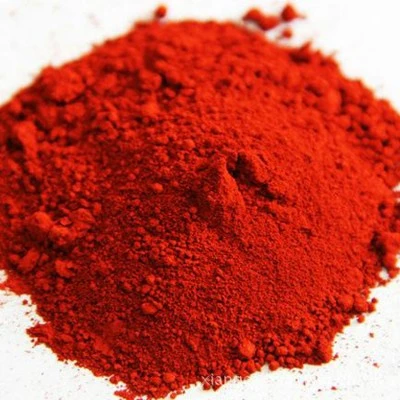
Iron oxide pigments have played a significant role in the lithium-ion battery industry. With the increasing demand for renewable energy sources, using these pigments as a component in the anode material of lithium-ion batteries has become popular due to their beneficial properties. This article will discuss the use of iron oxide pigments in lithium-ion batteries.
Lithium-ion batteries are widely used in the automotive industry, consumer electronics, and renewable energy sector. The anode material in the lithium-ion battery is responsible for the storage and release of lithium ions during the charging and discharging processes. Iron oxide pigments have been studied extensively as an alternative to traditional graphite anodes due to their high capacity and low-cost production.
Iron oxide pigments, such as Fe2O3, Fe3O4, and FeO, possess a high theoretical specific capacity and can provide a much higher energy density than graphite-based anodes. Furthermore, they exhibit excellent stability and safety properties, making them suitable for battery applications.
One of the most significant advantages of iron oxide pigments is their abundance, making them easily available and cost-effective to use. Additionally, they have excellent electrochemical properties, such as low resistivity, high electronic conductivity, and high rate capability, which make them ideal for use in lithium-ion batteries.
In conclusion, iron oxide pigments have shown excellent potential as alternatives to graphite anodes in lithium-ion batteries due to their high capacity, low-cost production, and excellent stability and safety properties. As the demand for renewable energy sources continues to grow, the use of these pigments in lithium-ion batteries will undoubtedly continue to increase. Further research in this area will undoubtedly pave the way for more efficient and cost-effective lithium-ion batteries.
Hunan Deson New Material Co., Ltd
+8613873121965
 Language
- English
- Português
- Español
- Français
- عربي
- Việt Nam
- Italiano
- 한국어
- 日本語
- Türkçe
- русский
- Deutsch
- Čeština
- ไทย
- Eesti
- Gaeilgenah Éireann
- Bai Miaowen
- íslenska
- Cymraeg
- Български
- اردو
- Polski
- hrvatski
- українська
- bosanski
- فارسی
- Lietuvių
- Latviešu
- עברית
- România limbi
- Ελληνικά
- dansk
- magyar
- Norsk
- suomi
- Nederlands
- Svenska
- slovenčina
- slovenščina
- हिंदी
- Indonesia
- Melayu
- Malti
- Kreyòl Ayisyen
- Català
- বাংলা
- Srbija jezik (latinica)
- O'zbek