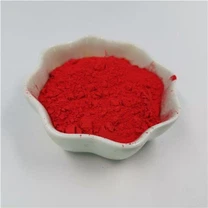
Iron oxide pigments are widely used in many industries due to their wide chromatogram, odorless, non-toxic, and inexpensive features. The ceramic industry is no exception. In recent years, with the development of the ceramic industry, the amount of iron oxide pigments in the ceramic industry has also increased year by year.
1. Application:
Ceramic products are mainly divided into seven categories: architectural ceramics, sanitary ceramics, garden glazed ceramics, art ceramics, daily-use ceramics, industrial ceramics, and special ceramics. Iron oxide pigments are widely used in these seven categories of ceramic products.
2. Characteristics and principles:
Iron oxide pigments have excellent coloring properties. The coloring properties of iron oxide are mainly used in ceramics to prepare various colors of glaze water. Due to the different price of iron ions, the iron oxide itself is multi-colored. When added to other glazes When iron oxide is used, the glaze tone is richer and brighter. In addition, in the manufacturing process of ceramics (glaze), different firing atmospheres are used, and the color of iron oxide is also different. In an oxidizing flame atmosphere, the coloring of iron oxide changes from yellow to reddish brown, and then changes to grape red. Brown. In a reducing atmosphere, the color changes from blue to gray and dark. These changes are the result of the mutual transformation of the dynamic balance of Fe2+ and Fe3+ in the glaze layer.
1. The application of iron oxide as the raw material of the green body: the green body is the basic material of ceramics.
Iron oxide is used as the raw material colorant of the green body and is mainly used in the wall and floor tile products of architectural ceramics. For example, for imitation granite unglazed porcelain tiles, the pigment preparation process is:
Iron oxide pigment and a small amount of blank are mixed into a color paste in a ball mill, and then controlled by a metering pump to enter the mixer. In the mixer, a certain proportion of color paste and base paste are mixed at high speed to form a color paste, and the pigment and base paste are respectively proportioned Spray into the drying tower to produce colored powder.
The recipe for the production process of imitation granite unglazed porcelain tiles:
Plastic raw material 20-30%
British and other infertile raw materials 20-40%
Feldspar flux raw material 20-30%
Special pigment additives 1-5% (such as iron oxide, chromium oxide, etc.)
Because of its excellent coloring function, iron oxide has become the main raw material for the preparation of granite-like unglazed porcelain tiles. For example, the chemical composition of the yellow imitation granite porcelain tile is:
SiO269%, Al2O318%, Fe2O3+TiO23%
CaO+MgO1.5%, K2O+Na2O4.5%, ignition loss 4%
In addition, iron oxide pigments are also added to some raw materials of purple clay pottery products to adjust the color of purple clay products.
2. Application of iron oxide in ceramic color glaze: The glaze is a continuous vitreous layer attached to the ceramic surface.
In ordinary ceramics, the coloring properties of iron oxide are mainly used to prepare various colors of glaze water. The valence of iron ions is different, and the iron oxide itself presents different colors. For example, ferrous oxide (Fe2O3) is red powder, and ferrous oxide (FeO) and ferroferric oxide (Fe3O4) are black powder.
Different iron oxide compounds can be selected according to needs. In addition to the multi-colored iron oxide itself, when iron oxide is added to other glazes, it can make the glaze richer and brighter. For example, iron oxide is added to the boric acid glaze containing alkali metals to present the red color of wine; when iron oxide is added to the semi-dull and matt white glaze, the series of shades from light brown, yellow gray and camel to dark brown are presented; when When iron oxide is used to make yellow glaze, only a few percent of iron oxide needs to be added to show a strong yellow color.