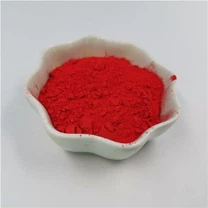
Iron oxide pigment is a kind of pigment with good dispersibility, excellent light resistance and weather resistance. Iron oxide pigments mainly refer to four types of coloring pigments, iron oxide red, iron yellow, iron black and iron brown, based on iron oxides, of which iron oxide red is the main component (approximately 50% of iron oxide pigments) , Mica iron oxide used as an anti-rust pigment and magnetic iron oxide used as a magnetic recording material also belong to the category of iron oxide pigments. Iron oxide is the second largest inorganic pigment after titanium dioxide and the largest colored inorganic pigment. Among all iron oxide pigments consumed, more than 70% are prepared by chemical synthesis, which is called synthetic iron oxide.
Iron oxide pigments and fillers include red, yellow, black, orange, etc. Among them, red and yellow iron oxide pigments are the most widely used in the field of architectural coatings, and iron oxide pigments are affected by various forces in the process of preparing architectural coatings. Agglomeration will affect the coloring power, hiding power, gloss, etc. of the pigment during the coating process. Therefore, it is necessary to be equipped with high-efficiency dispersants dedicated to iron oxide red and yellow pigments.
Iron oxide red and yellow pigment dispersants need to be able to improve the efficiency of the pigments from three aspects:
1. It can increase the pigment content and simplify the grinding process.
2. This dispersant can be used to disperse all types of iron oxide, thereby reducing the types of dispersants required. This is the most significant difference between it and polyacrylate additives.
3. The dispersant narrows the price and performance gap with many expensive polymer additives.
The principle of iron oxide dispersant is that the new product combines the dual advantages of electrostatic stability and steric stability. Even if it needs to be stored for a long period of time, it can still provide long-lasting pigment stability and ensure the consistency of high color strength. In addition, the additive can reduce the viscosity of the pigment concentrate, so that more pigment can be added to the concentrate to reduce the amount of concentrate required to cover a given surface area.
To sum up, the demand for the hiding power and color strength of paints and fillers in the architectural field is increasing, which increases the requirements for the use of iron oxide dispersants, and needs to meet the iron oxide powder produced by different colors and processes.